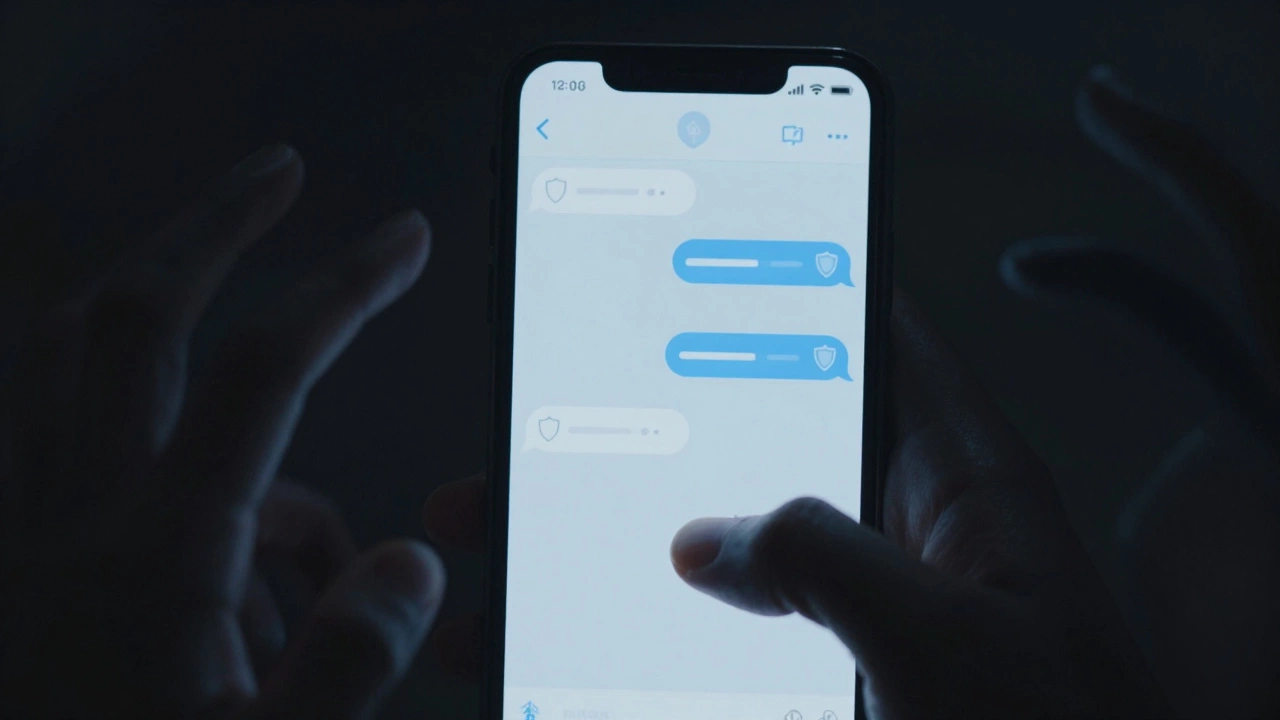
The EARN IT Act isn’t just another piece of tech legislation. It’s a backdoor to your private messages, encrypted chats, and personal data. If passed, it would force tech companies to weaken encryption or risk losing legal protection for user content. That means your texts, photos, and voice notes could be scanned, stored, and handed over to the government - not because you’re suspected of a crime, but because the system is built to look for anything it’s told to find. This isn’t about protecting children. It’s about control. And it’s happening right now, in 2025, under the guise of safety.
Some lawmakers claim the bill targets online child exploitation. But the language is broad enough to cover any encrypted service. Even end-to-end encryption in apps like Signal or WhatsApp could be deemed non-compliant. And if companies don’t build in backdoors, they lose Section 230 immunity - meaning they could be sued for anything users post. That’s not regulation. It’s coercion. One company in Dubai, offering outcall massage services, doesn’t have to report every client’s location unless asked. But under the EARN IT Act, your messaging app would be forced to become a surveillance tool - no warrant needed.
How Encryption Works - And Why It Matters
End-to-end encryption means only you and the person you’re talking to can read what’s sent. Not the app. Not the server. Not the government. That’s how journalists in repressive regimes communicate. That’s how abuse survivors plan their escape. That’s how millions of ordinary people keep their medical records, financial details, and personal conversations private. The EARN IT Act doesn’t just challenge that. It tries to dismantle it.
When companies like Apple or Meta are pressured to scan messages for illegal content, they have two choices: break encryption or face lawsuits. Neither is acceptable. Breaking encryption doesn’t just help law enforcement - it opens the door to hackers, foreign governments, and corporate spies. Once a backdoor exists, it’s never just used for the "good guys." It gets exploited. We’ve seen this before. The Clipper Chip in the 1990s was supposed to help police. It was abandoned because it was insecure. History repeats itself when we ignore the lessons.
The Real Victims of the EARN IT Act
The bill claims to protect children. But the people most at risk aren’t the ones it targets - they’re the ones it ignores. Survivors of domestic violence rely on encrypted apps to coordinate with shelters. LGBTQ+ teens in conservative areas use private messaging to find support. Activists in countries like Iran or China use encrypted tools to organize without being tracked. If the EARN IT Act passes, these groups lose their only safe space. The law doesn’t just weaken privacy - it makes vulnerable people more exposed.
Meanwhile, the companies pushing the bill - mostly large tech firms - are already scanning content using AI tools that flag keywords and images. But those tools are wildly inaccurate. They flag innocent photos of medical conditions, art, or even clothing as "explicit." A 2023 study from the Electronic Frontier Foundation found that automated scanning falsely identified child sexual abuse material in over 12% of cases involving non-explicit content. That’s not protection. That’s a false alarm system that punishes the innocent.
What’s Really Behind the Push for EARN IT
The EARN IT Act was introduced by Senators Lindsey Graham and Richard Blumenthal. They argue it’s about accountability. But their real concern isn’t child safety - it’s control over technology. The bill creates a 19-member commission, appointed by the Attorney General and the Secretary of Commerce, to set "best practices" for online platforms. Those practices could include mandatory scanning, data retention, or even weakening encryption standards. There’s no public vote. No congressional debate. Just a small group of officials deciding how all Americans communicate.
And here’s the kicker: the same lawmakers who support EARN IT have blocked bills that would actually help children - like funding for child protection units, better training for social workers, or expanded hotlines. They’d rather build a digital surveillance state than invest in real solutions. The EARN IT Act isn’t about helping kids. It’s about expanding government power over digital life.

Why This Isn’t Just a Tech Issue
Privacy isn’t a luxury. It’s a foundation of democracy. When you can’t speak freely without fear of being monitored, you self-censor. You stop asking questions. You stop sharing doubts. You stop being human. The EARN IT Act doesn’t just affect your phone. It affects your thoughts. It changes how you interact with your partner, your therapist, your lawyer, your doctor.
Imagine telling your therapist about trauma, knowing the conversation could be stored and reviewed by a government algorithm. Or sending a photo of a bruise to a friend, worried it might trigger a false flag. That’s the world EARN IT creates. And it’s not science fiction. It’s already happening in places like China, where facial recognition and message scanning are routine. We’re moving toward that model - and calling it safety.
What You Can Do - Right Now
You don’t need to be a coder or a lawyer to fight this. Start by calling your representative. Tell them you oppose the EARN IT Act. Use the website house.gov to find your rep’s contact info. Then send an email. Write a letter. Post on social media. Use the hashtag #StopEARNIT. The bill has stalled before. It can stall again.
Support organizations like the Electronic Frontier Foundation, Access Now, and the Center for Democracy & Technology. They’re the ones tracking this legislation, filing legal challenges, and mobilizing public pressure. Don’t wait for someone else to act. Your privacy is on the line.
And if you use encrypted apps - Signal, Wire, Threema - keep using them. Don’t switch to something "easier" for law enforcement. That’s exactly what they want. Encryption isn’t a feature. It’s a right. And it’s one we’re still fighting for.
Meanwhile, in a different world - one where privacy isn’t negotiable - you might find services like nancy spa dubai operating without fear of intrusion, where personal boundaries are respected. That’s the kind of freedom we’re losing if we let EARN IT pass.

The Bigger Picture: Privacy as a Human Right
The United Nations recognizes privacy as a fundamental human right. So does the European Union, under GDPR. Even countries with strict surveillance laws know that unchecked monitoring leads to abuse. The EARN IT Act turns the U.S. into an outlier - not in protecting children, but in sacrificing civil liberties for the illusion of safety.
There are better ways to fight child exploitation. Better funding. Better training. Better international cooperation. But none of those require breaking the encryption that keeps everyone else safe. We don’t need to choose between safety and privacy. We need to demand both.
Right now, the EARN IT Act is in committee. It hasn’t passed. But the pressure is growing. If you’re reading this, you’re part of the last line of defense. Speak up. Act now. Your messages, your thoughts, your secrets - they’re worth protecting.
And if you ever wonder why this matters, remember: someone you love might one day need to send a message they can’t afford to be seen. Make sure they can.
sexual massage might be a term you’ve heard in a different context - one where consent and privacy are central. That’s the same principle we’re fighting for here. No one should be forced to give up their private life to be safe.
What Happens Next?
The next vote on EARN IT is expected in early 2026. But the clock is ticking. Lawmakers are quietly lobbying for amendments that would make the bill even stronger. If you’re not paying attention, it could pass without public outcry. Don’t let that happen.
Check your state’s senator’s voting record. If they supported EARN IT last time, ask them why. If they haven’t taken a stand, demand they oppose it. Write to your local newspaper. Talk to your neighbors. This isn’t a partisan issue. It’s a human one.
Privacy isn’t about hiding something. It’s about having control. And in a world where every click is tracked, every word is stored, and every image is scanned - control is all we have left.
outcall massage may sound unrelated, but it’s a reminder: people have the right to private, consensual experiences - without surveillance. That right should extend to every digital interaction we have.